

.svg)
.svg)
Advanced AIOps - Distributed Tracing & Rooting


What you’ll learn
Our students work at..


Description
As modern systems evolve into sprawling microservice ecosystems, troubleshooting becomes exponentially more complex. This immersive course gives you the practical skills and deep technical insight needed to navigate that complexity with confidence.
Designed for professionals who want to master modern cloud-native diagnostics, this course goes far beyond traditional monitoring. You’ll learn how distributed tracing provides the full end-to-end visibility essential for pinpointing issues in today’s highly decoupled architectures. Think of it as the MRI of your distributed system - revealing causal relationships, latency bottlenecks, and hidden failure points that logs and metrics alone can never expose.
Through guided labs, real-world scenarios, and hands-on instrumentation, you’ll build the expertise to apply AIOps principles where they matter most: automated, accurate root cause analysis (RCA) in complex, distributed environments. By the end, you’ll know how to generate, collect, visualize, and interpret traces to diagnose problems with precision - and to correlate them with logs and metrics for truly holistic observability.
Labs Overview:
1. The Challenge of Microservices & The Rise of Distributed Tracing
- Understand why microservice architectures break traditional monitoring approaches such as logs and metrics.
- Learn how request context gets lost as calls hop across multiple independent services, making troubleshooting slow and ambiguous.
- Discover how distributed tracing restores end-to-end visibility, revealing the full journey of a request across all services.
- Get introduced to OpenTelemetry as the industry-standard, vendor-neutral framework for generating, collecting, and exporting trace data.
2. Installing the OpenTelemetry Collector
- Understand the role of the OpenTelemetry Collector as a standalone, vendor-neutral telemetry service.
- Install the Collector Contrib distribution and verify that it’s correctly set up in your environment.
- Learn the basic structure of a Collector configuration, including receivers, processors, and exporters.
- Run the Collector and explore its startup logs to confirm active components, listening ports, and overall runtime behavior.
3. Instrumenting Applications with OpenTelemetry
- Learn how applications generate telemetry and why instrumentation is required for producing traces.
- Enable auto-instrumentation for Java and Python.
- Use the OpenTelemetry Java agent and Python instrumentation tools to automatically capture spans from common frameworks and libraries.
- Configure applications to export trace data over OTLP directly to the Collector you installed earlier.
- Run instrumented services and verify that traces are being produced.
4. Visualizing Traces with Jaeger
- Learn what Jaeger is and why it provides a far better visualization experience than raw Collector logs.
- Install and run Jaeger All-In-One, giving you a full tracing backend and UI in a single process.
- Configure the OpenTelemetry Collector to export traces to Jaeger using OTLP.
- Access the Jaeger UI to prepare for exploring traces.
5. Practical Root Cause Analysis with Distributed Traces
- Learn how to interpret traces and spans in Jaeger to understand system behavior and request flows.
- Identify performance bottlenecks by analyzing trace timelines, critical paths, and long-running spans.
- Understand how latency propagates across services and how upstream/downstream dependencies affect request performance.
- Apply a step-by-step workflow to pinpoint root causes of slow requests, failures, and inefficient service interactions.
By the end of this course, you’ll have the confidence and hands-on expertise to instrument services, collect telemetry, visualize traces, and perform real root cause analysis across complex distributed systems. You’ll be equipped with practical skills in OpenTelemetry, the Collector, and Jaeger - empowering you to diagnose issues faster, improve service reliability, and elevate your observability practices. Jumpstart your journey into modern AIOps with us and transform the way you understand and troubleshoot cloud-native applications!
What our students say
.webp)
About the instructor
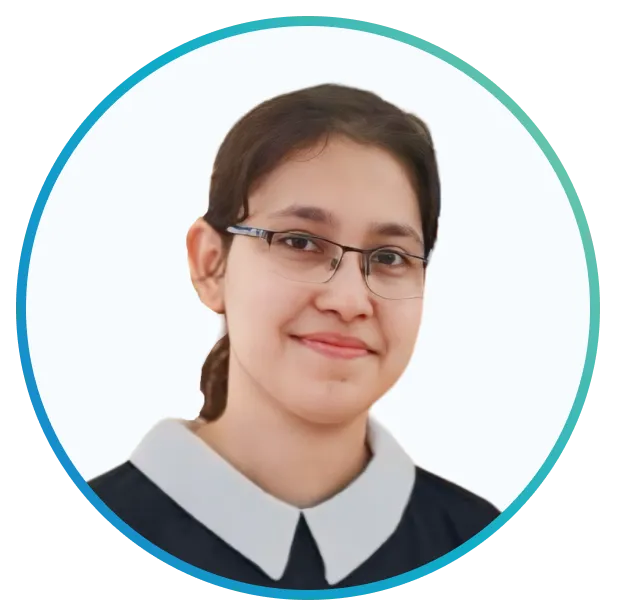
Harshita is a DevOps Lab Engineer at KodeKloud. Her interest lies in DevOps, automation and observability.
She is particularly interested in logging and application monitoring, and has worked on and configured various observability stacks.


Frequently Asked Questions
Who are KodeKloud courses for?
KodeKloud courses are designed for learners at different skill levels, from beginners to experienced IT professionals looking to develop or strengthen their technical skills.
Do KodeKloud courses include hands-on practice?
Yes. Many KodeKloud courses include hands-on labs and practical exercises that let you apply what you learn in real-world environments.
Do I need any prior experience to take a KodeKloud course?
Prerequisites vary by course. Each course page provides information about the recommended knowledge or experience you may need before starting.
Can I learn at my own pace?
Yes. KodeKloud courses are designed for self paced learning, so you can learn according to your schedule and revisit lessons and practice activities as needed.
Can I access KodeKloud courses on mobile devices?
Yes. KodeKloud can be accessed through supported web browsers and mobile devices, allowing you to learn from different devices.
Do KodeKloud courses provide certificates?
Certificate availability depends on the course and your KodeKloud plan. Check the individual course page or your account for the applicable certificate details.
How long does it take to complete a KodeKloud course?
Course completion time varies depending on the course length, your prior experience, and how much time you spend on hands-on practice.
Can I practice while taking the course?
Yes. Courses that include hands-on labs allow you to practice concepts as you progress through the lessons.
How do I start learning a KodeKloud course?
Choose a course that matches your learning goals, review its requirements and curriculum, and select the available subscription option to start learning.
Get access to KodeKloud’s all courses.
Get access to KodeKloud’s all Pro courses.
Get access to our Labs now!
190+
1280+
75+


Expand Your Skills in Other Domains
AWS Certified Cloud Practitioner (CLF-C02)


.svg)


GCP Cloud Digital Leader Certification

AZ-104: Microsoft Azure Administrator

DevOps Pre-Requisite Course
Fundamentals of DevOps
DevOps Interview Preparation Course
AI Infrastructure: LLM-D, vLLM and GPUs
AI-900: Microsoft Certified Azure AI Fundamentals
AI Agents Fundamentals

Kubernetes for the Absolute Beginners – Hands-on Tutorial
Certified Kubernetes Administrator (CKA)
Certified Kubernetes Security Specialist (CKS)
AWS Solutions Architect Associate Certification

AWS Lambda
.svg)
